Rethinking Digital Public Infrastructure Through an Afro-Feminist Lens
The African Internet Rights Alliance (AIRA) is pleased to have partnered with Pollicy to produce a report exploring the intersection of Digital Public Infrastructure (DPI), gender, and digital rights across Africa.
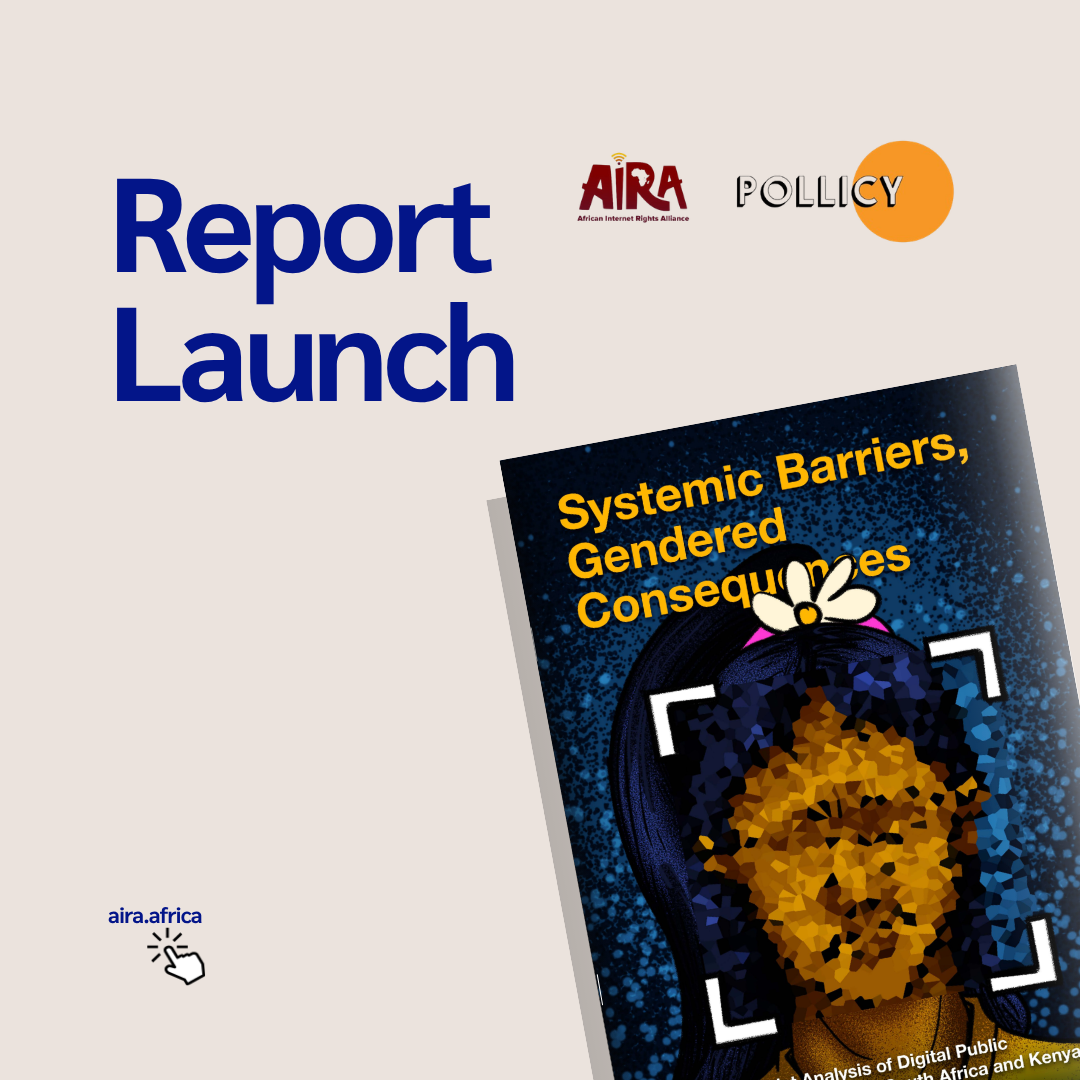
Titled “Systemic Barriers, Gendered Consequences: An Afro-feminist Analysis of Digital Public Infrastructure in Uganda, South Africa and Kenya,” the report examines how foundational digital systems—such as digital identification, payments, and data exchange—are being implemented, and how they are experienced by women and other underrepresented groups.
As DPI continues to gain momentum as a key driver of Africa’s digital transformation, it is often framed as a pathway to inclusion, efficiency, and development. However, this research highlights a more complex reality. It shows how existing inequalities, patriarchal norms, and emerging forms of digital authoritarianism shape access to and use of these systems—often reinforcing exclusion rather than addressing it.
Drawing on insights from Uganda, Kenya, and South Africa, the report calls for a shift from technology-driven approaches toward rights-based, inclusive, and gender-responsive frameworks. It challenges policymakers, practitioners, and stakeholders to rethink how DPI is designed and governed, and to place people—especially those most marginalised—at the centre of digital transformation efforts.
We invite you to read the full report and engage with its findings:
👉 Access the report here: Systemic Barriers, Gendered Consequence – AIRA x Pollicy Report